
 Use cases
 Messaging
 Taxi Companies
 Private Transport
 Transportation Entrepreneurs
 Last Mile
 SuperApp
 Software
 Taxi dispatch
 Corporate transportation
 Auction
 Products
 Booking Software
 Dispatch Platform
 Driver App
 Passenger App
 Web Widget
 Functions
 Schedule & Booking
 Driver Management
 Custom
 Corporate Portal
 Security & Support
 Resources
 Learn
Learn



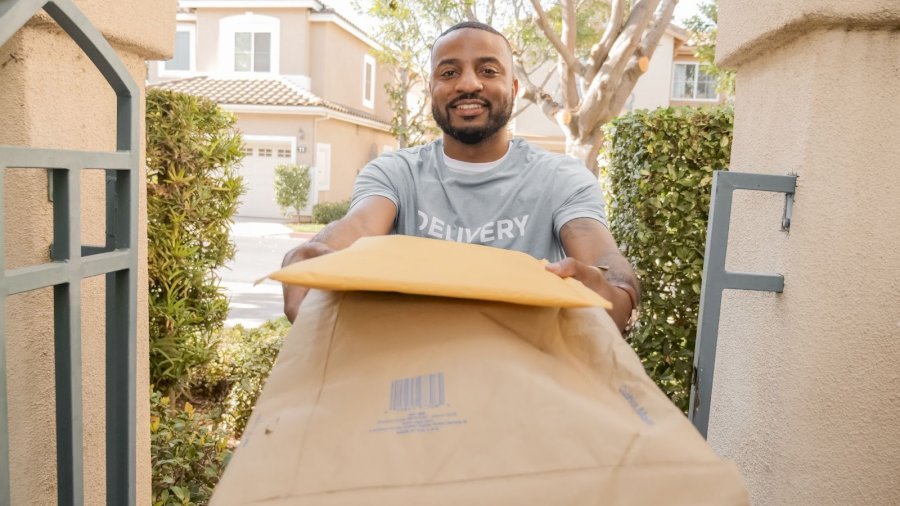
Over the years, transportation companies have made the last mile the foundation of their logistics. However, because it is so crucial, it is also prone to failure. And most of these errors stem from poor organization in the preceding stages. To avoid this, you must implement certain practices, which we will explain now.
What to do to survive the last mile?
Because consumers expect increasingly shorter delivery times, last-mile delivery is not only beneficial, but an essential tool for achieving both short- and long-term goals. Will O'Shea, Marketing Director at XPO Logistics, shared how to transform last-mile delivery into a competitive differentiator.
Involve third parties in your business
We know that the common life advice is to not delegate what you can do yourself. In this case, it's the opposite: if adding subcontracted delivery drivers to your fleet is more feasible for you, that's perfectly valid. Because despite what some might say, hiring drivers isn't profitable for every company.
Sharing operations with other omnichannel companies has the advantage of accelerating delivery times. We urge you to take advantage of the distribution offered by the 3PL, especially if they are located near your key consumption points. There are emerging companies looking to gain recognition at affordable prices, and this could be an opportunity for both transportation services.
Always be willing to communicate
Never assume that messages about delivery schedules are being received as you expect. It's too easy to misinterpret something on social media or for it not to be clear enough. This will prevent you from losing customers and partners over minor issues that could have been resolved with a simple conversation.
Always communicate every detail, no matter how trivial it may seem, whenever a delivery has even the slightest unusual feature. Customers and partners often use multiple channels to avoid misunderstandings. That's the tool you should be using: a built-in chat feature in your app and social media as an additional option.
Don’t take the packaging for granted
We've all received packages that arrived wrinkled, crushed, creased, or even broken. This naturally leads customers to question various aspects, from the condition of the product inside to the quality of the delivery service.
Avoid the mistake of assuming the customer will overlook something like tears in the packaging of their order. If the damage is too noticeable, it's the delivery driver's responsibility to replace the packaging before leaving it with the customer. Of course, this only applies if the damage is the driver's fault. If the damage is from the shipping company, they are responsible for taking care of it.
Help entrepreneurs
Many new business owners lack the patience or skills needed to process a large order. Busy customers appreciate the convenience of having all products pre-assembled, if needed, along with other value-added services such as last-mile delivery.
Invest in tools to make your last mile remarkable
When a delivery is on route, few things are more important to customers than location and punctuality. To stand out from the competition, provide real-time connectivity. Every detail of the last mile that can be made visible is an opportunity for growth. That's why you should choose software like ToolRides, which gives you maximum access to your customers.
Offer quick solutions
We recommend that all delivery drivers check each package before leaving the business. If the shipment is damaged, incomplete, or inaccurate, instruct your delivery team to submit a replacement request. It's important that this is done while they are still inside the customer's home. This will demonstrate to your customer that your service is working to find a solution and that you are dedicated.
Focus resources as they should be
Even the best companies like Uber or Cabify occasionally make mistakes, even if they aren't immediately obvious. This was very common in the past, until the last mile came into play. That's why it's important to invest in top-tier professionals to handle quality assurance, so you can focus on other, more important matters.
Use the last mile as your identity
Develop a defined delivery protocol; there's nothing better than strategies for achieving goals. When working with a team of suppliers and drivers, they must be carefully selected. Furthermore, they must be trained to fully understand how your company delivers the delivery experience.
Every employee in a business, whether new or experienced, must be fully immersed in the brand's values. Likewise, performance evaluations must be implemented for each driver. This ensures that any potential partner supplier is aware of the brand's protocols and can decide whether or not to join the network being launched.
Not just involving logistics
We hope these tips are helpful for everyone who is constantly evolving and adding logistical optimizations to their processes. However, always keep in mind the importance of respecting your customers, their time, their money, and the simple act of choosing a transportation service. If you're looking for more information about last-mile delivery, we have a variety of comprehensive articles on our blog.