 Use cases
 Messaging
 Taxi Companies
 Private Transport
 Transportation Entrepreneurs
 Last Mile
 SuperApp
 Software
 Taxi dispatch
 Corporate transportation
 Auction
 Products
 Booking Software
 Dispatch Platform
 Driver App
 Passenger App
 Web Widget
 Functions
 Schedule & Booking
 Driver Management
 Custom
 Corporate Portal
 Security & Support
 Resources
 Learn
Learn



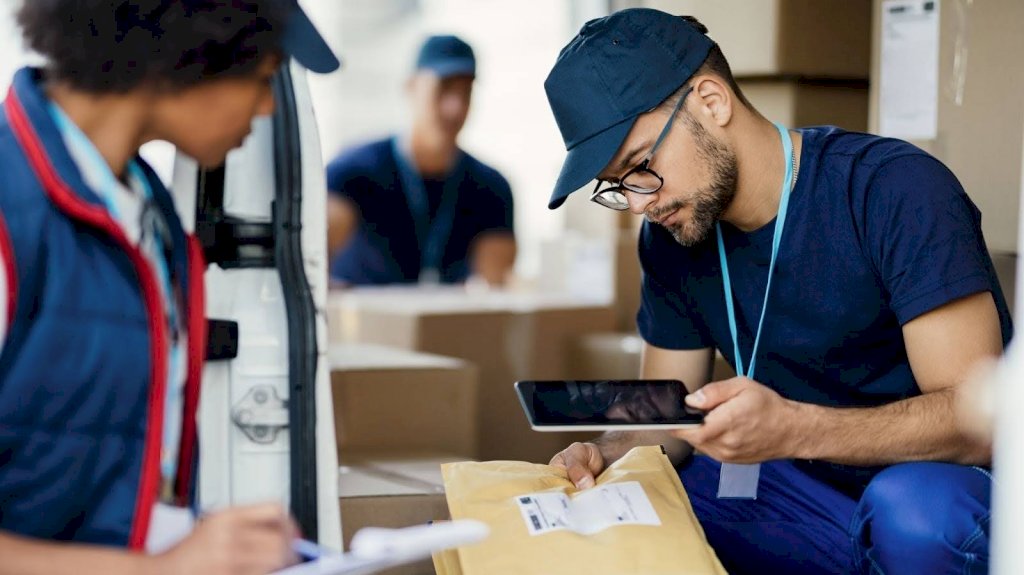
With consumers demanding absolute precision and increasingly narrow delivery windows, you need to make the best last-mile software choice.
Modernizing last-mile delivery processes means understanding that apps are more than just a tool. That's why this article will break down all the critical factors every manager should evaluate to find the right software. Only then can you ensure that your investment in 2026 drives growth and protects profit margins.
Algorithms as the core
The first criterion you should consider is the software's ability to perform real-world optimization based on last-mile delivery. Simply displaying a digital map is no longer sufficient; you need a calculation engine that can process variables in seconds. You should ask yourself: Does the delivery software allow for real-time route adjustments in response to new orders or cancellations?
If you're offered route planning software that's static, you should know you're being sold something outdated. The algorithm must also be designed to maximize delivery density per zone. Every kilometer saved translates directly into less fleet wear and tear and greater driver productivity. Robust software should allow you to configure variables such as vehicle load capacity, customer delivery windows, or whether the package is fragile.
Management and traceability
Transparency is the currency of last-mile delivery. That's why suitable enterprise software must offer clarity for both management and customers. In 2026, simply sending a "your order will arrive today" message won't suffice. Live tracking is essential, allowing the recipient to see the vehicle's location and the updated estimated time of arrival.
Managers need a digital dashboard that displays the status of the entire fleet, allowing them to identify delays before they become customer complaints. This should be supported by proactive notifications and automated alerts from the system which should mark key milestones: when the vehicle leaves the base, when it is two stops away, and when the delivery is successful.
Digitization of the confirmation process
Eliminating paper and manual management is a necessary transition for automation to occur. The chosen delivery platform must guarantee that each delivery is irrefutably documented digitally. The driver must be able to capture this information securely, such as through digital signatures, photos, or GPS coordinates, directly from the app.
The synchronization of package status and route should be instantaneous for management, drivers, and customers. If a delivery fails, the driver should be able to select pre-configured reasons such as customer absence, incorrect address, etc., which in turn trigger automatic actions, such as scheduling a second delivery attempt for a later time.
Driver interface and its adoption
You know if software truly works and is understandable for the public by how drivers receive it. The driver app should present the delivery sequence intuitively, integrated with effective navigation systems. However, the processes within the app should be designed so that the driver spends as little time as possible interacting with the phone.
Logistics software should allow for sending instructions or last-minute changes directly to the application, eliminating the need for phone calls or messages through unofficial channels that fragment information. Drivers need to be able to focus on making deliveries efficiently, and rapid response is key to that.
Technical integration and scalability
For companies with large fleets, software cannot be an isolated system. It must be able to communicate with the rest of the organization's technology ecosystem. True automation occurs when orders flow from the sales system to the transportation system without human intervention.
A cloud-based delivery system ensures that your infrastructure scales with your business. Furthermore, you must ensure it provides full access to your operational data for profitability and performance analysis. Remember, this is your company's information, so only you should manage it, without third-party interference.
The impact of a correct choice
Let's take an example: a company with 40 vehicles in a metropolitan or urban area. Before choosing a specialized system, its dispatchers spent four hours a day manually organizing routes. This resulted in address errors and a percentage of deliveries requiring a second trip due to communication issues. What changes will occur when implementing a platform with algorithmic optimization and live tracking?
-
Planning time will decrease from 4 hours to a few minutes.
-
The rate of failed deliveries is reduced thanks to customer proximity notifications.
-
The fleet's delivery capacity increased without the need to hire more vehicles.
This level of efficiency is what allows a transportation company to move beyond being a reactive operator. This will make all the difference in transforming it into a profitable and scalable organization.
The advantage of automation
Choosing the best software requires a vision that prioritizes operational automation, real-time visibility, and integration capabilities. It's not just about buying an app, it's about finding the one that will be the backbone enabling your fleet to compete with the big players.
By focusing on route optimization, customer traceability, and process digitization, you transform logistics into a competitive advantage. The future of ground transportation is digital, and the last-mile software you choose today will define your market position tomorrow.