 Use cases
 Messaging
 Taxi Companies
 Private Transport
 Transportation Entrepreneurs
 Last Mile
 SuperApp
 Software
 Taxi dispatch
 Corporate transportation
 Auction
 Products
 Booking Software
 Dispatch Platform
 Driver App
 Passenger App
 Web Widget
 Functions
 Schedule & Booking
 Driver Management
 Custom
 Corporate Portal
 Security & Support
 Resources
 Learn
Learn



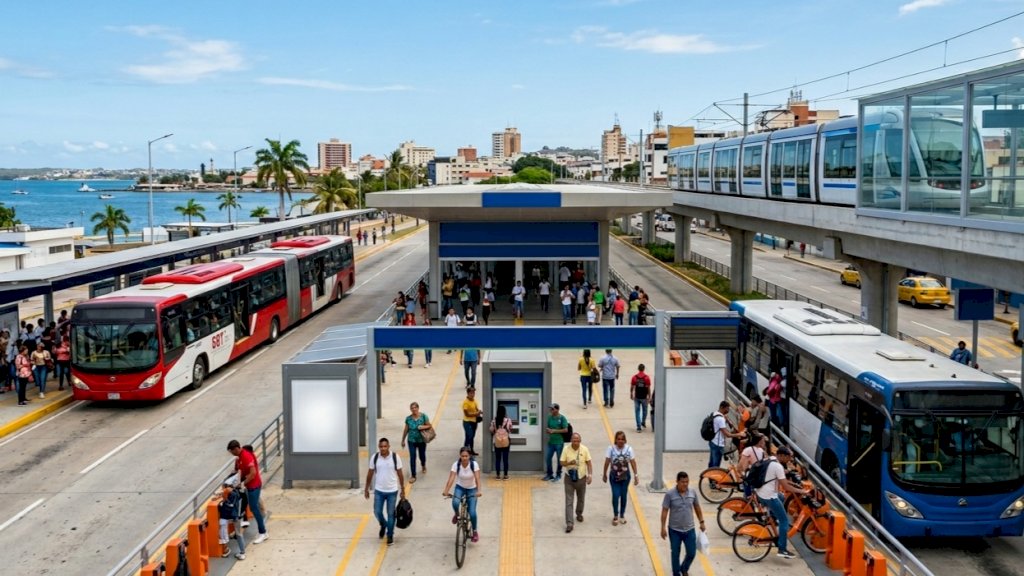
Currently, relying on multiple systems poses a financial risk; the key lies in an integrated transportation system. In fact, traditional taxi companies suffer from exhausting peak demand due to a lack of technology.
Technological fragmentation. Many companies try to diversify by using three different apps when unifying their taxi and delivery services with one software could prevent operational chaos, duplicated tasks, and dispatch errors. A fragmented operation increases administrative costs and confuses drivers. Ultimately, the taxi company loses competitiveness against "Super-Apps" that already offer everything in a single interface.
Service integration is indeed a key strategy for maximizing profitability in the transportation and logistics sector. By combining different services and optimizing processes, companies can improve their operational efficiency and reduce costs. Below, we'll discuss some ways in which service integration can contribute to this goal.
Route optimization
Route optimization in an integrated transportation system involves using technologies and methodologies to efficiently plan and manage the movement of goods and vehicles across a transportation network. It combines advanced technology, data analytics, and planning methodologies to improve operational efficiency, reduce costs, and increase customer satisfaction.
Synergies between services
Combining different modes of transport (e.g., land, sea, and air) allows us to leverage the strengths of each and offer more comprehensive solutions to our customers. Synergy between services on a single platform is simply the collaboration and coordination between different modes of transport and logistics services to maximize efficiency, reduce costs, and improve the customer experience.
Strategic points are established where goods can be transferred between different modes of transport seamlessly, facilitating a smooth transition. A centralized system allows for the coordination of operations across all modes of transport, ensuring that cargo moves efficiently and waiting times are minimized.
The synergy between services in an integrated transportation system enables more efficient and effective operations by combining different modes and logistics services. This not only improves operational efficiency and reduces costs, but also provides a better customer experience and promotes sustainable practices.
Improved inventory management
Integrating logistics services can facilitate better inventory management, enabling a more agile response to demand and reducing storage costs. This is based on the coordination and optimization of different logistical aspects, resulting in greater efficiency and effectiveness in product handling.
A comprehensive platform provides real time visibility into inventory levels across different locations (warehouses, distribution centers, stores). This allows businesses to know exactly which products are available and where they are located. Alerts can be set up to notify managers when inventory levels reach critical thresholds, facilitating timely replenishment.
An integrated system significantly improves inventory management by providing visibility, optimization, and flexibility. This not only contributes to a more efficient and profitable operation but also enhances the customer experience and promotes sustainable practices within the supply chain.
Technology and automation
Implementing technologies that integrate different logistics services allows for more precise operational tracking and more informed decision-making. Technology and automation play a fundamental role in the functioning of an integrated transportation system, improving efficiency, visibility, and accuracy in logistics management.
Transportation management systems (TMS) use advanced algorithms to optimize transport routes, taking into account factors such as traffic, weather conditions, and costs. This helps reduce delivery times and operating costs. Blockchain technology, on the other hand, can be used to securely and transparently record transactions, improving product traceability throughout the supply chain.
Technology and automation in a transportation and delivery app enable more efficient and effective management of logistics operations. By combining different technologies, companies can improve their ability to adapt to market changes, optimize resources, and offer better customer service.
Sustainability
The integration of services can also contribute to more sustainable practices by optimizing resource use and reducing the carbon footprint associated with transportation. In a transportation super app, this refers to the implementation of practices and technologies that minimize environmental impact, promote economic efficiency, and improve social equity.
Using transportation management systems (TMS) to plan more efficient routes reduces fuel consumption and, consequently, greenhouse gas emissions. Similarly, consolidating shipments to maximize vehicle capacity decreases the number of trips required, thus reducing environmental impact.
Integrating services not only improves profitability per kilometer traveled, but also offers competitive advantages in an increasingly demanding market.
Achieve integrated transport services
Integrating taxi, delivery, and courier services into a single integrated transportation system can improve operational efficiency, reduce costs, and offer a smoother experience for users. To achieve this integration, the following is needed:
-
Unified technological platform.
-
Interoperability of services.
-
Flexible business models
-
Route optimization
-
Mixed fleet
-
Strategic collaborations
For the integration to work, the customer must be able to order everything from one place under your own terms.
Integrating taxi, delivery, and courier services is more than just a technological trend
Taxi companies that manage to centralize these services under a single system will not only survive the competition, but will become the logistical backbone of their cities. The key to success in 2026 is understanding that your business isn't just moving cars, but managing the movement of an entire city. Is your company ready to stop waiting for passengers and start moving the city? Begin as soon as possible with your own integrated transportation system.