 Use cases
 Messaging
 Taxi Companies
 Private Transport
 Transportation Entrepreneurs
 Last Mile
 SuperApp
 Software
 Taxi dispatch
 Corporate transportation
 Auction
 Products
 Booking Software
 Dispatch Platform
 Driver App
 Passenger App
 Web Widget
 Functions
 Schedule & Booking
 Driver Management
 Custom
 Corporate Portal
 Security & Support
 Resources
 Learn
Learn



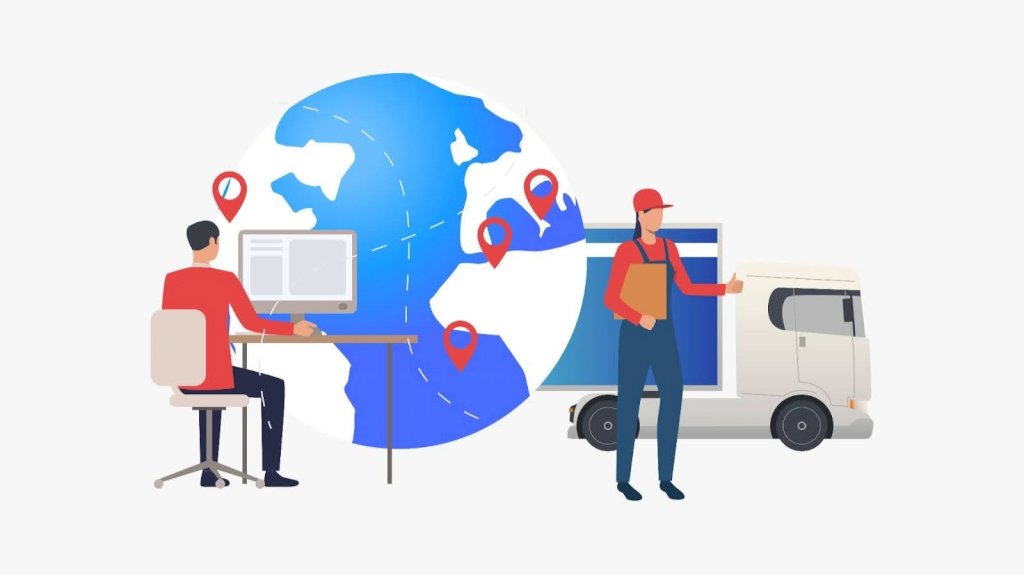
Ground transportation management is no longer limited to mechanical supervision. It has evolved into a highly precise mobility discipline. The challenge is no longer simply moving people from point A to point B, but doing so as efficiently as possible without sacrificing profit margins. The key lies in combining solid operational strategies with software that serves as the brain of the entire operation.
Today’s operating environment demands an immediate response to customer requests. Companies that continue relying on manual processes will eventually become less competitive and fall behind. The future of mobility operations belongs to businesses that automate dispatch. This article explores how effective strategies and a modern system can help your brand scale.
Optimization Strategies
Today, a successful strategy focuses on optimizing existing resources. This means that every route must be calculated based on more than simply finding the shortest distance. Companies must use transportation management software to consider every relevant variable and maximize the number of services completed per mile traveled.
Reducing human bias also minimizes calculation errors that often result in empty miles. Route optimization should be viewed as a reliable financial decision, not merely a logistics function. By using planning algorithms to reduce unnecessary mileage, companies can decrease vehicle wear and extend the useful life of their fleets as much as possible.
The Foundations of Profitability
A transportation management system creates a transparent operating environment in which drivers have the tools they need to perform their work effectively. A clear interface simplifies communication with the dispatch center and allows drivers to manage their schedules, report incidents and confirm services immediately.
From an administrative perspective, maintaining a complete connection with every vehicle makes it possible to monitor fleet performance in detail. Collecting data on driving behavior helps identify patterns that could lead to accidents or expensive corrective maintenance. This supports more informed decisions that reduce driver turnover over time and ensure that brand standards remain consistent.
The ability to group bookings and predict arrival times with minimal deviation helps transportation companies fulfill more demanding contracts. However, this is only possible when the system integrates route data with each driver’s service history. This provides enough information to dynamically adjust time estimates and set more accurate expectations.
Transportation Management That Attracts Corporate Customers
For these strategies to have a meaningful impact, they must be supported by a robust mobility system. This ground transportation optimization is managed through a central command center that provides 360-degree visibility across the organization. These systems centralize important processes such as real-time tracking and digital invoicing.
Software designed for corporate customers creates a seamless operation. When a customer requests a trip, the order enters the system directly and is assigned to the most suitable driver based on proximity and efficiency criteria. This technology reduces the administrative workload for both the transportation provider and the customer. Rather than being an additional expense, technology becomes the engine that allows the company to scale without having to expand its dispatch team at the same rate.
Making Informed Decisions
Ultimately, digital transportation fleet management reaches its full potential through data analysis. Reports generated by the transportation platform become the foundation for decision-making. A company cannot rely solely on its managers’ intuition; its strategy must be built on statistical evidence.
Which route is the most profitable? At what time do the most incidents occur? Which drivers are exceeding average efficiency levels? Modern system dashboards provide answers to these questions. Advanced analytics also helps identify new business opportunities. In a market with narrow margins, maintaining complete control over operating costs is essential.
The Key to Business Scalability
One of the greatest challenges in transportation operations management is the administrative ceiling. When attempting to expand their fleets, many companies discover that management costs increase disproportionately. This happens when the operating structure depends on manual processes or disconnected tools that require constant human intervention for every dispatch, incident and invoicing report.
The right strategy for achieving growth is not to double the size of your workforce. It is to take advantage of a digital architecture that allows service volume to scale exponentially. With real-time monitoring and financial management available in one place, the same administrative team can supervise a much larger and more sophisticated operation.
A System Built for Effective Management
Fleet performance determines a company’s ability to survive in the long term. Fully digitizing the operation provides the resilience required to adapt to market changes, allowing the company to become agile, transparent and, above all, highly profitable. Centralization not only reduces the margin for error but also gives the company the agility it needs to respond to major corporate contracts.
Successful management requires a comprehensive approach that combines route optimization with centralized information. Companies that successfully implement these capabilities through their software will be prepared to lead the industry. They will be able to deliver world-class ground transportation management supported by technological precision that ensures operational excellence on every trip.