
 Use cases
 Messaging
 Taxi Companies
 Private Transport
 Transportation Entrepreneurs
 Last Mile
 SuperApp
 Software
 Taxi dispatch
 Corporate transportation
 Auction
 Products
 Booking Software
 Dispatch Platform
 Driver App
 Passenger App
 Web Widget
 Functions
 Schedule & Booking
 Driver Management
 Custom
 Corporate Portal
 Security & Support
 Resources
 Learn
Learn



Fast response times and driver satisfaction are two essential factors that determine whether a fleet grows or falls behind. This raises an important question: What matters more to your fleet—the speed of an algorithm or the freedom for drivers to choose their own trips? A taxi dispatch system can help you find the right answer for your operation.
An efficient algorithm can optimize trip assignments, reduce passenger waiting times and maximize vehicle utilization. This can lead to greater customer satisfaction and increased revenue for the fleet.
However, a strictly algorithm-driven approach may overlook human factors such as a driver’s experience or local knowledge, both of which can be crucial in complex situations.
Allowing drivers to choose their trips can increase job satisfaction and motivation, potentially resulting in better customer service. Drivers with greater freedom can make decisions based on their knowledge of the area and professional experience, which may contribute to better transportation service management.
A Taxi Dispatch Platform That Combines Both Models Is the Ideal Solution
A system that combines automatic assignment with a bidding model can balance operational efficiency with driver satisfaction, creating a more robust and adaptable operation. The best solution may not be choosing one model over the other, but finding the right balance between algorithmic efficiency and driver autonomy.
In modern transportation, the automatic taxi assignment method is more than a technical setting. It determines which drivers receive trips and how quickly customers are served. In this article, we examine the critical differences between automatic assignment and bidding so you can decide which model your taxi company needs to compete effectively.
A Slow Dispatch System Leads to Dissatisfied Customers
Many traditional taxi companies still depend on manual processes that create operational chaos. Even with a digital platform, selecting the wrong dispatch model can cause drivers to reject trips or leave passengers feeling ignored. Poor dispatch management can also push drivers toward platforms that offer greater earning opportunities and more autonomy.
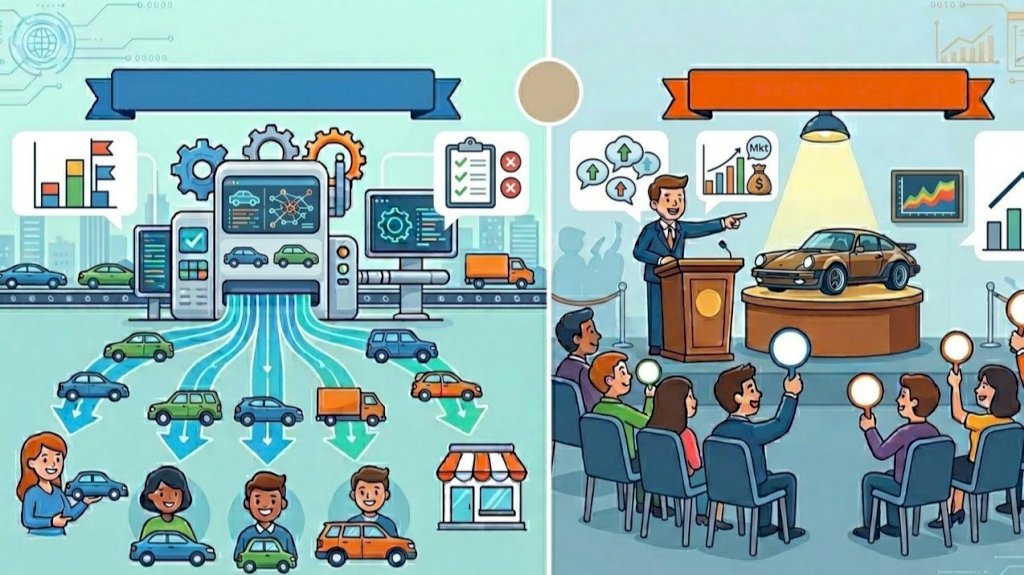
Automatic assignment and the transportation bidding model are two different approaches. With automatic assignment, an algorithm selects an available driver according to predefined criteria such as proximity to the passenger, estimated arrival time and vehicle availability.
This model generally aims to maximize operational efficiency, reduce passenger waiting times and optimize vehicle utilization. In a bidding model, however, drivers can actively choose which trip requests they want to accept. Depending on how the platform is configured, they may also submit their own fare or arrival-time proposals, giving them greater control over their work and earning opportunities.
Automatic assignment prioritizes efficiency and optimization by using an algorithm to distribute trips. This can produce faster response times, although drivers have less control over which services they receive. Bidding prioritizes driver choice and flexibility, but passengers may need to wait longer while they review and select an offer.
Choosing between these approaches depends on the specific objectives of the mobility software and the preferences of both drivers and passengers.
Automatic Assignment: The Power of the Algorithm
It is important to understand how this model works. The system decides which driver receives each trip according to predefined rules. It is the model commonly associated with major ride-hailing platforms such as Uber.
Automatic assignment within a taxi dispatch system combines technology, logistics and optimization. Algorithms can improve service efficiency, reduce waiting times and increase customer satisfaction.
The strength of the dispatch algorithm lies in its ability to process large volumes of real-time data and make fast, accurate decisions that benefit both passengers and drivers. It can evaluate factors such as distance, availability, estimated arrival time, current traffic and weather conditions. As technology advances, these systems will continue to become more precise and efficient.
The Impact of a Fleet Bidding Model
A bidding model can have a significant impact on a taxi dispatch system, affecting both the company’s internal operations and the passenger experience.
Bidding can encourage drivers to participate more actively by allowing them to choose services that match their location, schedule and earning expectations. It can also create competition between drivers, potentially giving passengers more options regarding fares and estimated arrival times.
A fleet bidding model has the potential to transform dispatch operations by increasing driver autonomy, encouraging competition and improving service flexibility. However, it also introduces challenges that must be carefully managed, such as longer decision times, inconsistent fares or low acceptance rates for less attractive trips. The system must therefore be configured to protect the interests of the company, drivers and passengers.
Choosing Between Automatic Assignment and Bidding Requires Careful Consideration
Automatic assignment delivers a fast and efficient operation, while bidding creates a community of more autonomous and motivated drivers. In 2026, successful taxi companies will be those capable of balancing the precision of an algorithm with the flexibility of a driver-centered marketplace.
Choosing between automatic assignment and bidding for taxi fleet management is a critical decision that can significantly affect service efficiency and day-to-day operations. The final choice should be based on a careful analysis of the specific needs of the taxi dispatch system.