
 Use cases
 Messaging
 Taxi Companies
 Private Transport
 Transportation Entrepreneurs
 Last Mile
 SuperApp
 Software
 Taxi dispatch
 Corporate transportation
 Auction
 Products
 Booking Software
 Dispatch Platform
 Driver App
 Passenger App
 Web Widget
 Functions
 Schedule & Booking
 Driver Management
 Custom
 Corporate Portal
 Security & Support
 Resources
 Learn
Learn



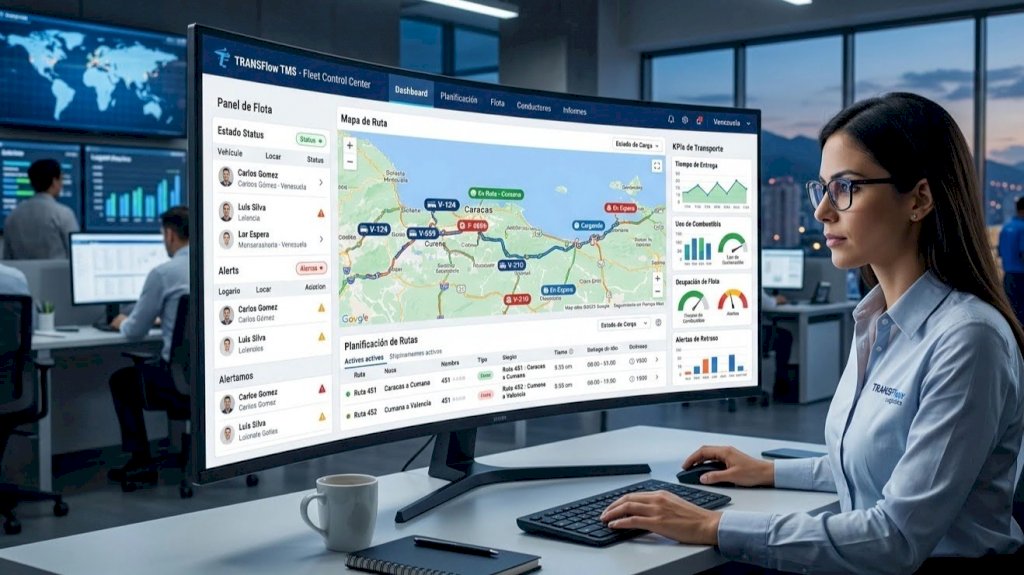
A Transportation Management System is a software tool designed to help companies plan, execute, and optimize transportation operations. Integrating transportation software provides real-time visibility into transportation activities, enabling organizations to manage their logistics operations more efficiently.
A TMS can be integrated with other business systems, such as ERP (Enterprise Resource Planning) and WMS (Warehouse Management Systems), to provide a complete view of the supply chain. This reduces the time and effort required to manage transportation operations.
A TMS is an essential tool for any modern transport operation, helping companies to manage their logistics resources more effectively and adapt to an increasingly competitive business environment.
How to identify if your operation is ready for a TMS?
Determining if your operation is ready to implement a Transportation Management System (TMS) involves evaluating various aspects of your logistics operations and business needs. You must meet several criteria to determine if you are prepared.
First, you should assess your needs. If you handle a significant volume of shipments, especially if they are increasing, a TMS can help you manage the complexity.
In fact, if you're facing problems like frequent delays, high costs, or a lack of visibility in your supply chain, it could be a sign that you need a TMS. If your processes rely heavily on manual data entry, a TMS will likely help reduce errors and improve accuracy.
If your business struggles with route planning or efficient carrier allocation, a TMS can offer tools to simplify this process. If, after evaluating the factors, you conclude that your operation is ready for a TMS, you can proceed to research suitable options and plan its implementation.
Initial diagnosis (current processes: Excel, calls, WhatsApp, etc.)
Conducting an initial assessment of your current processes is a crucial step in understanding your operational status and determining if you're ready to integrate transportation software like a TMS. This assessment should cover all stages, including route planning, carrier allocation, shipment tracking, and incident management.
You need to use all the tools you use at each stage of the process:
-
Excel: What is it used for? (planning, tracking, reporting).
-
Telephone calls: What are they used for? (coordination, confirmations).
-
WhatsApp: What is it used for? (fast communication, tracking).
-
Other methods: Are there any other tools or methods being used?
Also review how communication flows between different departments (sales, logistics, customer service). Evaluate whether there is effective collaboration between teams. List the inefficiencies observed at each stage of the process and consider how these problems impact customer satisfaction.
This initial assessment will give you a clear view of your current processes and the challenges you face. From there, you can make informed decisions about how to implement a TMS, how necessary it is, and what the most appropriate approach would be for its implementation. Furthermore, you'll have a solid foundation to present your case to management and obtain the support needed to move forward with modernizing your logistics operations.
Integration phases
Integrating a transportation management system (TMS) is a process that can be divided into several phases. Each phase is crucial to ensuring the TMS is implemented effectively and that the desired objectives are achieved. By following these phases, companies can maximize the chances of a successful implementation and realize the desired benefits in terms of operational efficiency and customer service.
Operational survey (routes, drivers, fares)
Operational mapping is a critical phase when integrating transportation software, as it provides the foundation upon which all logistics operations will be built. By collecting and analyzing data on routes, drivers, and rates, companies can make informed decisions that improve their operational efficiency and market competitiveness.
Operational mapping is a critical phase in implementing a TMS, as it provides the foundation upon which all logistics operations will be built. By collecting and analyzing data on routes, drivers, and rates, companies can make informed decisions that improve their operational efficiency and market competitiveness.
System configuration (zones, rules, users)
The operational survey in the context of digitizing a transport company involves collecting and analyzing critical information about the routes, drivers, and rates that will be used in logistics operations.
Define which drivers are best suited for which routes, considering their familiarity with the geographic areas and their performance history. Operational mapping is a critical phase in TMS implementation, as it provides the foundation upon which all logistics operations will be built.
Progressive migration
Progressive migration involves moving data, processes, and operations to a new system gradually, rather than all at once. This approach has several advantages:
-
Risk reduction: It allows you to identify and resolve problems at early stages without affecting the entire operation. If something does go wrong, the impact is limited.
-
Real-time testing: Facilitates testing in a real-world environment while keeping the old system operational. This allows for adjustments to the new system based on feedback and results.
-
Gradual adaptation: Users can adapt to the new system little by little, which reduces resistance to change and improves acceptance.
-
Migration phases: Divide the migration into phases, such as: Phase 1: Migrate historical data. Phase 2: Implement specific TMS modules (e.g., route management). Phase 3: Complete the migration with additional features (reports, analytics).
Team training
Team training is crucial to ensure all users are prepared to use the new system effectively. The team's current skills should be assessed to determine the specific training needed for each role.
Develop training programs that include both theoretical and practical sessions. This may include:
-
Interactive workshops.
-
Online tutorials.
-
Accessible manuals and documentation.
A post-training support system should be established where employees can ask questions and receive assistance as they begin using the TMS.
Go-live controlled
A controlled go-live involves launching the new system in a planned and supervised manner to minimize disruptions to operations. Some strategies for a successful go-live include:
-
Detailed planning: Develop a go-live plan that includes a timeline, necessary resources, and assigned roles during the launch.
-
Final testing: Conduct thorough testing before launch to ensure all system components are functioning correctly.
-
Active monitoring: Establish a support team that is available during the go-live to quickly resolve issues and assist users.
-
Immediate feedback: Gather user feedback during the first few weeks after launch to identify areas for improvement.
-
Contingency plan: Have a plan ready to revert to the old system if critical problems arise that cannot be resolved quickly.
These integration phases ensure a smooth transition to integrated transportation software. By addressing each of these components carefully and with planning, organizations can reduce risks, improve system adoption, and ensure their logistics operations remain efficient and effective throughout the change process.
A TMS allows you to keep your operations running without interruption.
By implementing a TMS, organizations can improve the visibility of their operations, better manage their resources, and reduce costs. It allows for the planning of optimal routes, which reduces delivery times and improves operational efficiency. Furthermore, it offers analytics and reports that help identify areas for improvement, enabling companies to make proactive adjustments to their operations.
TMS is a key tool that helps integrate transportation software for logistics operations, to improve efficiency, visibility and control over transportation, as well as the supply chain.