
 Use cases
 Messaging
 Taxi Companies
 Private Transport
 Transportation Entrepreneurs
 Last Mile
 SuperApp
 Software
 Taxi dispatch
 Corporate transportation
 Auction
 Products
 Booking Software
 Dispatch Platform
 Driver App
 Passenger App
 Web Widget
 Functions
 Schedule & Booking
 Driver Management
 Custom
 Corporate Portal
 Security & Support
 Resources
 Learn
Learn



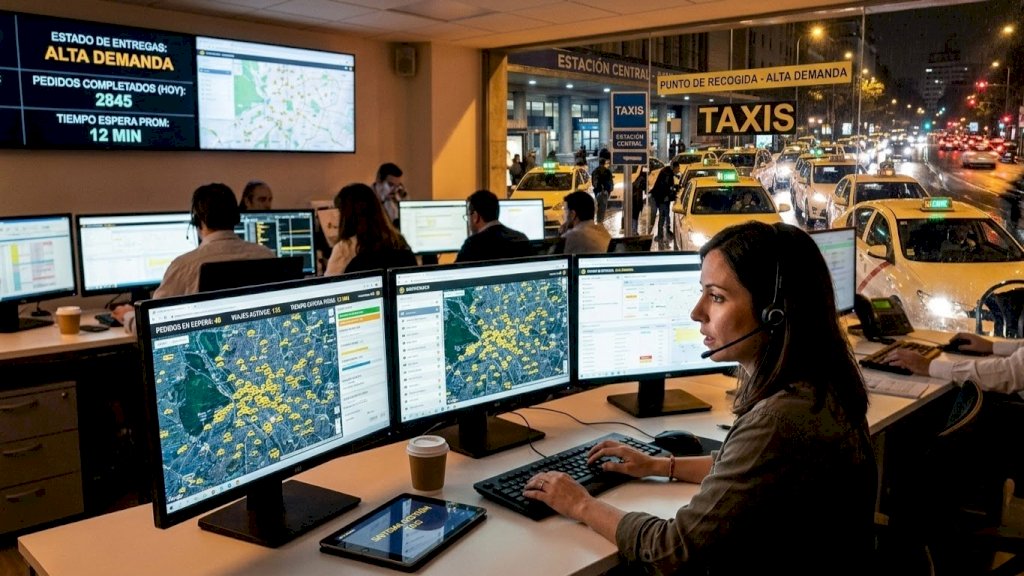
During holidays, major trade events, or periods of severe weather, passenger transport demand and last-mile delivery volume can double or triple simultaneously within hours. If your fleet still relies on manual processes or basic dispatch, chaos will devour your profitability. It's time to discover how to manage order and delivery during peak seasons.
This isn't a luxury; it's the critical factor in preventing your app from crashing, your drivers from becoming frustrated, and your regular customers from migrating to multinational platforms during the most lucrative days of the year. Traditional taxi companies often lack a unified system to balance passenger trip allocation with corporate package deliveries. Trying to coordinate this surge of services through instant messaging groups, spreadsheets, or phone calls quickly overwhelms dispatchers' operations.
Operational disarray results in critical delivery delays, loss of trust from B2B business customers, mass cancellations of trips by desperate users, and the definitive loss of thousands of dollars in potential revenue that goes to competitors with better technological infrastructure.
Automated dispatch based on Artificial Intelligence and proximity
Efficient order management in a high-demand environment is crucial for ensuring customer satisfaction and optimizing resources. With the increasing number of orders coming in per minute, human intervention can become a bottleneck, slowing down the dispatch process.
To address this challenge, it is essential to implement delivery software that takes absolute control of basic assignments, minimizing dependence on the human operator.
Implementing predictive algorithms is key to optimizing the dispatch process. These algorithms allow for the instant assessment of which taxi is closest to the pickup point, taking into account critical factors such as the direction of travel and real-time traffic.
Integrating artificial intelligence into the dispatch process not only improves operational efficiency but also provides a superior customer experience by ensuring faster response times and greater reliability in vehicle allocation. With predictive algorithms and intelligent allocation systems, companies can transform their logistics and adapt to the demands of the modern market.
Load consolidation and dynamic multi-stop routing
During peak season, dispatching a single taxi for order and delivery management becomes logistically unsustainable. To maximize operational efficiency and reduce costs, it is essential that transportation management software (TMS) optimizes vehicle space utilization, enabling load consolidation and dynamic routing.
The TMS must incorporate advanced route sequencing algorithms that process multiple delivery requests within the same commercial area. These algorithms allow for the intelligent grouping of up to four or five packages in the trunk of a single taxi.
Load consolidation and dynamic multi-stop routing are key elements for optimizing logistics during peak seasons. Implementing route sequencing algorithms and real-time recalculation capabilities allows companies not only to reduce operating costs but also to improve customer satisfaction by ensuring faster and more efficient deliveries.
Implementation of dynamic pricing and congestion charges
The balance between the supply of drivers and customer demand is regulated through price. A delivery app can incentivize the fleet to go out on the streets during the most challenging times, resulting in better service for users and greater profitability for drivers.
Implementing software rules to adjust fares in real time is essential for effectively managing supply and demand. Automatic multipliers operate using algorithms that analyze real-time data, such as request volume and the number of vehicles available in different areas. Transparency in pricing is key to building trust between customers and the platform. Both corporate clients and individual users have access to the final, adjusted fare before confirming the service.
Through a clear and user-friendly interface that displays the total cost, including any congestion or dynamic adjustment surcharges, drivers are not only charged upfront but also prevent future disputes and ensure fair compensation. This pricing clarity not only improves order and delivery management but also fosters a fairer and more equitable relationship among all service participants.
B2B Self-Service Portals to mitigate channel saturation
The balance between driver supply and customer demand is regulated through pricing. Technology allows for incentives to keep the fleet on the road during peak times, resulting in better service for users and higher profitability for drivers. Implementing software rules to adjust fares in real time is essential for effectively managing supply and demand.
Automatic multipliers operate using algorithms that analyze real-time data, such as the volume of requests and the number of vehicles available in different areas. When heat maps indicate areas saturated with requests and a shortage of vehicles, the system subtly increases the price per kilometer. Transparency in pricing is key to building trust between customers and the platform. Both corporate clients and individual users have access to the final, adjusted rate before confirming the service.
It's time to automate your business with software
Automating dispatch means optimizing routes with multiple stops and offering self-service tools to your corporate clients, transforming seasonal chaos into a predictable, efficient, and highly profitable billing machine. You already have the vehicle infrastructure; it's time to give it the digital intelligence needed to lead the market. Don't wait until your lines are overloaded and your customers leave. It's time to implement a much more efficient order and delivery management system.