 Use cases
 Messaging
 Taxi Companies
 Private Transport
 Transportation Entrepreneurs
 Last Mile
 SuperApp
 Software
 Taxi dispatch
 Corporate transportation
 Auction
 Products
 Booking Software
 Dispatch Platform
 Driver App
 Passenger App
 Web Widget
 Functions
 Schedule & Booking
 Driver Management
 Custom
 Corporate Portal
 Security & Support
 Resources
 Learn



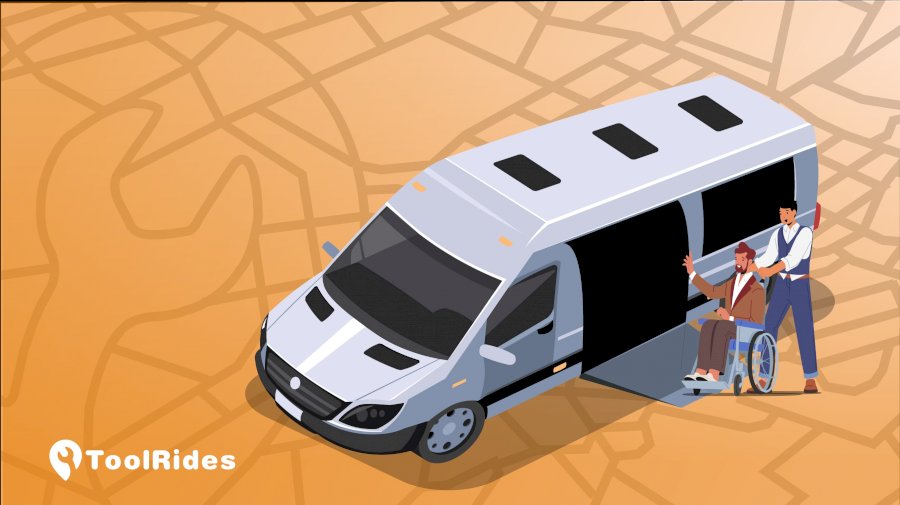
This article explores the new mobility options that have entered the transportation sector in recent years and the ways existing barriers can be addressed to make those options more accessible. These five sources outline federal requirements under the Americans with Disabilities Act for public transportation and complementary demand-response transportation providers, including service design, system policies, trip booking, the construction of bus stops, transit facilities and accessible pathways, stop and route announcements on fixed-route vehicles, and the maintenance of accessibility equipment.
Accessibility to public transportation for people with disabilities is essential to ensuring mobility and inclusion for everyone in society. Transportation authorities and companies must work together to implement measures that guarantee accessibility and inclusion throughout the public transportation system.
There are several requirements that are important for providing people with disabilities with a complete and accessible travel experience: learning about available mobility options, scheduling trips, reaching the vehicle, confirming that it is the correct vehicle, boarding, paying the fare, traveling and exiting safely, knowing when to request a stop, and reaching the final destination.
Education and Training
Education and training programs are essential for improving public transportation accessibility and encouraging positive interactions between staff and passengers. Transit employees need proper guidance on how to welcome passengers and accommodate different accessibility needs.
Passengers should understand how to use the service in a way that meets their needs, while providers should clearly communicate the level of assistance available and the features of the service. Clearly defining expectations for both mobility provider staff and passengers can help prevent misunderstandings and disappointment.
Two key components of training programs for bus operators and paratransit drivers are disability awareness and passenger assistance techniques. Drivers, as well as call center and transit station staff, should receive customer service training. In fact, many transit managers have reduced employee turnover by hiring people who already demonstrate strong customer service skills and then training them to drive, while continuing to reinforce customer service and awareness of the needs of passengers with disabilities.
Teaching good driving skills and helping employees prepare for a Commercial Driver’s License (CDL) exam is often easier than motivating people who are uncomfortable interacting with the public. Well-informed and motivated staff are better equipped to meet the needs of passengers with disabilities smoothly and efficiently, while also gaining satisfaction from helping passengers reach their destinations safely. Travel training programs for transportation services provide guidance on how to use public transportation effectively.
Applications
An application can run on a smartphone or desktop computer to coordinate and carry out functions requested by the user. With tools such as ToolRides, you can create a platform for the general public that provides information about available mobility options for reaching a destination, displays arrival times or estimated minutes until buses and trains arrive, provides directions for driving, using public transportation, cycling, walking, or using mobility devices to reach destinations, and can even allow users to pay fares digitally.
Successful applications need to be clear and intuitive to use. A good practice is to conduct beta testing with future users who have sensory or cognitive disabilities. The accessibility of web-based technology, whether used on desktop computers or smartphones, should also be evaluated against international accessibility guidelines.
Why Public Transportation Accessibility for People with Disabilities Is Important Today
Accessibility to public transportation for people with disabilities is a crucial issue in today’s society. Ensuring that everyone, regardless of physical or cognitive ability, can use transportation safely and comfortably is essential for promoting equal opportunities and social inclusion.
A lack of accessibility in the transportation service industry can limit the mobility of people with disabilities, making it more difficult to participate in everyday life, access essential services, find employment, and take part in social activities. For this reason, measures must be implemented to improve accessibility in both public and private transportation, such as those mentioned above, so that everyone can travel independently and safely. Some measures that can improve accessibility to public transportation for people with disabilities include:
-
Providing ramps or elevators at train, subway, and bus stations to make access easier for people with reduced mobility.
-
Reserved spaces inside vehicles for wheelchairs and other mobility devices.
-
Clear and accessible information about routes, schedules, and services for people with visual or hearing disabilities.
-
Training staff to properly assist people with disabilities and provide support whenever necessary.
-
Designing accessible stops and stations with appropriate signage and enough space to allow people with disabilities to move around safely and comfortably.
In addition, transportation accessibility does not only benefit people with disabilities. It also improves the travel experience for all users by promoting a more inclusive and respectful environment. Ultimately, accessibility to public transportation is a fundamental right that should be protected to ensure equal opportunities and full participation for everyone in society.