 Use cases
 Messaging
 Taxi Companies
 Private Transport
 Transportation Entrepreneurs
 Last Mile
 SuperApp
 Software
 Taxi dispatch
 Corporate transportation
 Auction
 Products
 Booking Software
 Dispatch Platform
 Driver App
 Passenger App
 Web Widget
 Functions
 Schedule & Booking
 Driver Management
 Custom
 Corporate Portal
 Security & Support
 Resources
 Learn
Learn



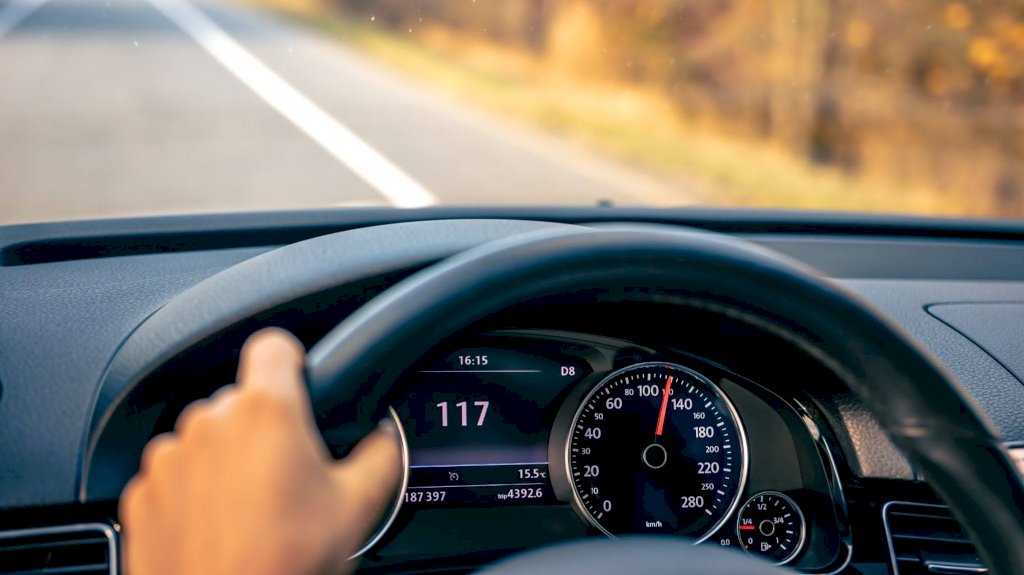
In the transportation business, there's a false illusion of productivity that often deceives managers. If they see fleets constantly on the move, they think the company is thriving and generating revenue. However, there's a silent enemy eating away at profit margins street by street: unproductive journeys, or "dead mileage."
A dead kilometer is any distance traveled by a vehicle that doesn't generate direct revenue or add value to the operation. This could be the empty trip after dropping off a passenger or an unnecessary detour due to traffic congestion. These trips consume fuel, wear down tires, accelerate asset depreciation, and fatigue the driver without generating any profit. To prevent this from happening to you, we've identified how to measure this drain; but more importantly, how to eliminate it through operational digitization.
Successfully identifying the problem
To eliminate unproductive journeys, we must first understand their origin. In a traditional operation, dead kilometers are often hidden within the daily routine of transport companies. Therefore, we've divided them into three main categories to make them easier to identify.
Journeys without passengers
This is a classic scenario that took decades before it began to be seen as a problem. Units complete a service and return to base without any passengers. That trip is 100% unproductive, but it consumes exactly the same amount of fuel and time as if it were on another assignment.
Inefficient dispatches
With manual dispatch, the dispatcher typically assigns the trip to whoever answers first. This often results in a vehicle having to travel miles across town to pick up a customer, while another ideal vehicle was parked two blocks away or just finishing a service a few minutes away. This approach trip is a purely unproductive journey.
Lack of optimized routing
When drivers encounter heavy traffic, they lack navigational tools beyond their own knowledge of the city. This is where improvisation comes into play, leading to detours, getting lost, or ending up with unnecessarily longer routes. This results in phantom kilometers that were never factored into the initial quote for your transportation business.
How do you cut back on what you can't measure?
The biggest mistake companies make without technological controls is calculating their costs based solely on the vehicle's odometer reading, or on estimates based on total fuel consumption at the end of the month. This is like trying to go on a restrictive diet by only weighing yourself once a year without actually changing your habits.
To effectively measure routes, you need to transform mileage into a KPI on the software's operational dashboard. You can calculate the ratio between the actual distance traveled with cargo/passengers and the total distance traveled during the day. If a vehicle travels 200 kilometers per day but only 120 correspond to billable services, you have a 40% operational inefficiency.
Multiplying the operating cost per kilometer includes fuel, preventative maintenance, parts wear, and driver time. These factors are then multiplied by the total number of empty kilometers accumulated. This isn't taken seriously until the financial impact is seen at the end of the month. Only then does the need for a change cease to be a suggestion and become a priority.
Technological strategies to attack the kilometers
Trying to reduce dead miles by asking drivers to "be careful" or dispatchers to "think about routes better" is a futile effort. Human processing capacity and the number of assignments per person are limited. The definitive solution requires the integration of a Transportation Management System (TMS) leveraging three technological pillars.
Intelligent dispatch
The software-based allocation system evaluates the exact GPS position of the entire fleet in milliseconds. When a new request comes in, the system automatically calculates which vehicle requires the shortest approach distance to cover the service. This completely eliminates subjective human judgment and drastically reduces the mileage before pickup.
The famous route optimization
To avoid detours and poor decisions on the road, the platform plots the optimal route before the driver even sets off. The algorithms consider real-time traffic, street directions, and the most efficient routes in the shortest time. If an incident occurs, the system automatically recalculates the route in the driver's app and notifies them on the dashboard.
Service groupings
To combat empty return trips, modern platforms allow you to visualize demand and plan circular routes or routes with multiple stops. Long empty runs are rare when you first start using the software in your transportation business. And when they do happen, it's usually for a specific reason, such as needing that particular type of vehicle for a special service.
Involve the driver in the processes
Technology alone won't work if the field team chooses to ignore it. Many drivers are accustomed to taking alternate routes out of habit or personal convenience. To align the team on reducing unproductive trips, use TMS efficiency reports to reward drivers with the fewest route deviations and those who best optimize their fuel consumption.
When efficiency is financially rewarded, the driver becomes the primary advocate for the optimal route. Ensure that the route directions in the mobile app are clear and straightforward. If the driver receives simple and precise instructions, they won't need to improvise.
Every kilometer counts
Migrating from intuition-based management to data-driven operations and technological automation is the fundamental step to stop this drain. When you ensure that every kilometer traveled is justified, measured, and optimized, the operation ceases to be a draining effort and becomes a precise machine. Don't continue to squander the resources of your own transportation business, transform your management through digitalization.