 Use cases
 Messaging
 Taxi Companies
 Private Transport
 Transportation Entrepreneurs
 Last Mile
 SuperApp
 Software
 Taxi dispatch
 Corporate transportation
 Auction
 Products
 Booking Software
 Dispatch Platform
 Driver App
 Passenger App
 Web Widget
 Functions
 Schedule & Booking
 Driver Management
 Custom
 Corporate Portal
 Security & Support
 Resources
 Learn
Learn



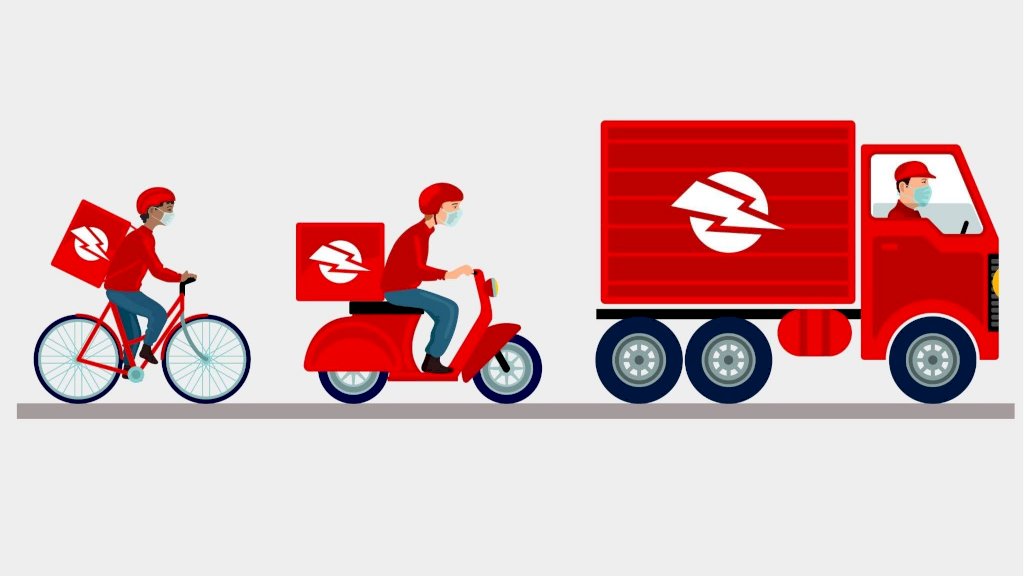
Ordering food has evolved into complex last-mile logistics thanks to delivery software. In this scenario, choosing its features should not be a decision based on aesthetics. It must focus on the operational capabilities that ensure profitability and complete control of the operation.
Today’s market is saturated with generic applications that promise instant solutions, but operational reality is far more demanding. A system that cannot scale without increasing fixed administrative costs ultimately becomes an anchor for the business. For this reason, it is essential to identify the features that can truly transform delivery management from chaos into a highly precise automated operation.
Beyond a Simple Map
The first feature required to improve order and delivery management is the ability to adapt to urban distribution. It is not about connecting points on a map, but about processing multiple variables in seconds. An efficient routing engine must analyze customer time windows and the load capacity of each vehicle.
True efficiency in this market is often measured by reducing so-called “empty miles.” Your system must allow the company to manage more deliveries without expanding its fleet by eliminating unnecessary routes and geographic overlaps. You can no longer leave delivery performance to the intuition of drivers or dispatchers.
Complete Visibility with Online Tracking
Uncertainty is the greatest source of hidden costs in logistics. When an administrator does not know where fleet vehicles are, and customers do not know where their order is, the service center becomes overwhelmed. For this reason, real-time delivery tracking is a non-negotiable feature. However, it is not just about seeing a moving dot; it is about informational transparency that reduces operational friction.
Live tracking with an estimated arrival time displayed in the app transforms the customer experience. This transparency drastically reduces inquiry calls and messages, freeing administrative staff to focus on higher-value tasks. Management can then maintain complete operational control, identify delays and make informed decisions before a delay turns into a complaint.
Closing the Financial Cycle
Professional management does not truly end when the package reaches the customer, but when the transaction has been validated by all parties. Manual delivery sheets and signatures are now seen as relics that only create administrative delays and significant information risks. Modern software must integrate features that guarantee complete service traceability.
Having a driver app to capture delivery confirmations, photographs and GPS coordinates is essential for two reasons: security and cash flow. First, it provides irrefutable proof to resolve any possible claim. Second, it instantly synchronizes collected data with the administrative dashboard, enabling efficient invoicing.
Driver App
The relationship between the dispatch center and field staff must be as seamless as possible. High-performance software eliminates the need for constant communication through unofficial channels such as instant messaging. Automated dispatch allows the system to assign services to the most suitable driver based on preconfigured efficiency and proximity criteria.
The driver app should be a tool that displays clear routes, specific instructions and optimized navigation. This digitized driver management reduces work-related stress and minimizes operational errors. When drivers have all the information at their fingertips, their productivity levels increase significantly.
From Disorder to Operational Control
Consider a regional distribution company with 25 vehicles. Before implementing a delivery logistics system, its processes were manual. As a result, dispatchers spent the entire day organizing routes on physical maps, while drivers received instructions over the phone. Errors were constant, and the company could not accept major new contracts because its administrative structure was already at its limit.
If this example feels familiar, adopting a specialized last-mile platform can deliver an immediate transformation. Route planning becomes much faster, moving from an initial idea to an organized plan in less than half an hour. Real-time visibility can reduce delay complaints by 60%, as customers receive automatic proximity alerts.
Software as Your Best Asset
Choosing the right software in 2026 is not a matter of convenience, but of business survival. The features that truly matter are those that directly address inefficiency: algorithmic optimization, complete traceability, process digitization and automated dispatch.
For fleet owners, investing in a transportation platform is the best defense against market volatility. By focusing on these critical capabilities, organizations transform their logistics into a profitability engine. Deliver world-class service while maintaining complete control through your delivery software.