 Use cases
 Messaging
 Taxi Companies
 Private Transport
 Transportation Entrepreneurs
 Last Mile
 SuperApp
 Software
 Taxi dispatch
 Corporate transportation
 Auction
 Products
 Booking Software
 Dispatch Platform
 Driver App
 Passenger App
 Web Widget
 Functions
 Schedule & Booking
 Driver Management
 Custom
 Corporate Portal
 Security & Support
 Resources
 Learn
Learn


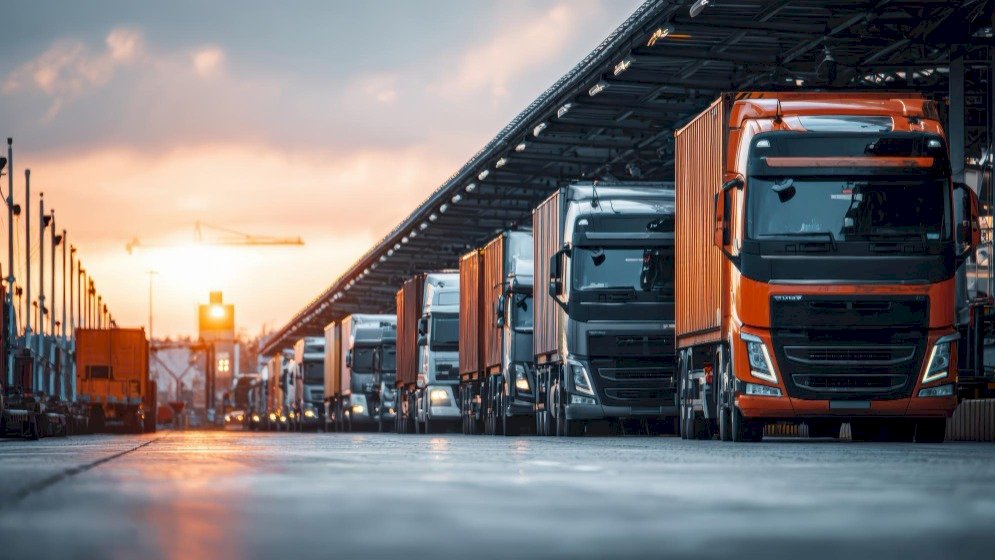
Achieving driver management in a large-scale operation is a challenge. It requires moving beyond intuition and embracing conscious decision-making. The success of a transportation company no longer depends on the volume of its assets. Now, it's about the efficiency with which the behavior and productivity of its human capital are managed.
Managing at the highest level of your business is fundamental to its survival. Operational profitability depends on and is sustained by these efforts. An efficient driver isn't just someone who completes their routes; they are someone who takes responsibility for aspects such as vehicle lifespan, fuel consumption, passenger safety, and more.
Beyond GPS
As operations grow, traditional GPS, which only indicates the unit's location, becomes insufficient. This is why investment is made in management software. Fleet management, on a large scale, requires a transition to proactive driver monitoring. It's not enough to know where they are, it's necessary to understand what they are doing and how they are doing it.
The problem with large fleets is that they begin to experience what is known as "operational invisibility". When no centralized management tool is used, the operations manager loses the ability to supervise the units. This leads to compliance gaps, unjustified downtime, and fragmented human resource management.
The key to administrative control
To manage a large fleet, centralization is essential. Driver management software acts as a single "ledger" where all the items listed below are recorded:
-
Unique digital profile: Each driver must have a centralized history that includes identity documents, licenses, current certifications, and a performance history.
-
Shift and availability management: Automation allows you to know who is actually available to assign services in real time. This avoids what call centers did in the past: massive phone calls and the saturation of communication channels.
-
Two-way communication: The software must allow instructions, route changes, and notifications to be sent directly to the driver's app, eliminating intermediaries or factors that could disrupt communication and ensuring that information is received and confirmed.
Investing with companies like ToolRides takes driver management to the next level. They offer a control panel where you can view vital daily details quantitatively. In addition, they maintain a history that records trips, fares, and the hours drivers worked.
Productivity and performance based on data
Large-scale management should be a discipline approached with near scientific rigor. It's not about monitoring, but about optimizing all operations as much as possible. A driver who receives data-driven feedback feels valued and clearly understands where they can improve. Thanks to software technology, it's possible to measure key performance indicators, or KPIs, that transform productivity.
Response times
It's essential to measure how long each driver takes to accept a trip and reach the pickup point. Only then can you track the time it takes to accept trips. With this data, you can begin making informed decisions that actually improve performance.
Route efficiency
This KPI analyzes which drivers complete their services within the stipulated timeframes, supported by GPS tracking. It also identifies those who require additional training due to frequent delays or who have received a warning. This will help prevent bad habits such as taking unplanned breaks, speeding, taking incorrect routes, and wasting time.
Automation: The solution to disordered growth
When you manage a small fleet, a human dispatcher can assign trips. However, when you start managing 100 vehicles, that same dispatcher becomes the biggest bottleneck in your business. Automating the process is the only way to scale without chaos. Software typically selects the nearest and best-positioned driver automatically, eliminating bias and favoritism.
The driver receives complete service details in the app, helping the transport management avoid transcription errors or address mix-ups. Additionally, the system automatically records whether the driver arrived on time, followed delivery protocols, and received a positive rating from the customer. All of this happens without anyone in the office having to pick up a phone.
Training and retention in a competitive market
Managing drivers on a large scale inevitably leads to increased staff turnover. Good software helps mitigate this problem by standardizing processes. This allows new drivers to integrate into the operation quickly by following the system's predefined rules. While it doesn't eliminate training, investing in companies like ToolRides means the apps' ease of use saves time and effort.
One of the biggest challenges in fleet management is calculating commissions or salaries. Traditionally, taxis used to calculate fares based on the driver's discretion, while in some cities, taxis operated with meters. A transportation platform that automates trip settlement reports eliminates uncertainty, improves trust, and reduces staff turnover.
The leap to scale
Managing large-scale fleets is ultimately an exercise in control through technology. Companies that master this aspect are those that understand that software is not just a tracking tool, but an engine of operational efficiency.
Digitizing your driver management isn't the end of human labor, but the beginning of professional, equitable, and profitable management. By 2026, technology driven driver management will be the difference between a company that merely survives and one that leads the market.