 Use cases
 Messaging
 Taxi Companies
 Private Transport
 Transportation Entrepreneurs
 Last Mile
 SuperApp
 Software
 Taxi dispatch
 Corporate transportation
 Auction
 Products
 Booking Software
 Dispatch Platform
 Driver App
 Passenger App
 Web Widget
 Functions
 Schedule & Booking
 Driver Management
 Custom
 Corporate Portal
 Security & Support
 Resources
 Learn
Learn
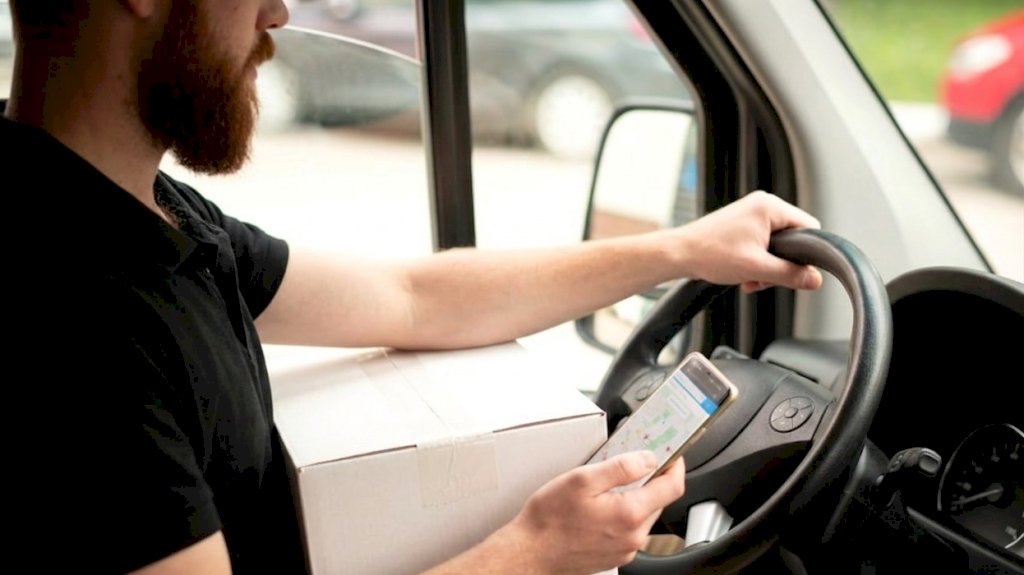
In last-mile delivery, route optimization has gone from being a competitive advantage to a necessity for survival. The operating cost isn't in the vehicle itself, but in the inefficiency of every kilometer traveled. Every extra meter, every minute of waiting, and every unnecessary detour is money that leaks directly from your net profit.
When we talk about optimizing routes, we're not talking about a driver speeding to get to the customer or their destination on time. It's about equipping them with the necessary tools, in this case technological ones, to make the trip a shorter distance. It allows them to avoid bottlenecks and maximize the number of services delivered per day with all the information we have for you.
The traditional route as an enemy
Route management based on driver experience or dispatcher knowledge is a step backward for modern businesses. An entire business cannot depend on people who simply know the city, it creates structural blind spots. When you don't have last-mile software and rely on intuition, you create problems like the following:
-
Dead kilometers: Distances traveled without passengers or cargo, simply to position oneself or return to base.
-
Route bias: The driver usually follows the route that is comfortable, not the one that is most efficient for the business.
-
Inability to react: In the face of an accident or sudden traffic, the driver's "mental" route becomes obsolete, causing chain delays.
The fundamental change involves moving from human route management to algorithmic management, as it completely and automatically addresses all these issues.
The technological base
To optimize, you must first start by measuring, you can't improve what you can't see. Modern delivery software is the only tool capable of performing calculations that would take a human hours to process. Furthermore, it not only calculates the shortest distance but also the most efficient one, taking into account variables such as speed limits, street direction, and, above all, real-time traffic.
The platform must be fed with real-time, minute-by-minute mobility data, enabling proactive rather than reactive dispatch. True optimization occurs when the system assigns service to the vehicle based on its current location and route, making the entire process more efficient without requiring dispatcher intervention.
Strategies to reduce your time
Once you begin implementing the technology, optimization must be supported by clear strategies. For example, using geofencing prevents fleets from being randomly dispersed by dividing your operating area into logical zones. This allows drivers to stay where demand is predictable, drastically reducing travel times to pickup or delivery points.
Consolidation of services
When corporate or last-mile delivery operations are involved, optimization relies on intelligent grouping. A modern delivery platform can combine several nearby services into a single master route, effectively creating a route with multiple deliveries. This transforms single-point trips into highly profitable circular routes.
Reduced waiting times
A stationary vehicle represents a fixed cost that generates no revenue, good management also includes managing stops. Waiting times between services are beginning to decrease thanks to the aforementioned routing, resulting in 15 to 30 percent more services completed throughout the day.
Driver vs. Technology
Despite all the positive aspects of implementing technology in mobility companies, drivers often resist this change. More traditional drivers tend to believe that logistics software is a form of control and even a source of distrust. To successfully overcome these obstacles, optimization must be presented as an ally and implemented gradually, using arguments such as:
-
Less stress: The driver no longer has to decide which route is best, the system gives the indication, which reduces mental fatigue.
-
Better income: By being more efficient, the driver can fulfill more services, which under a commission or incentive scheme translates into higher income for him.
-
Data-driven training: Use route reports from your delivery system to reward top-performing drivers. This fosters a culture of efficiency and motivation, making your company attractive to other potential drivers.
Although this dynamic can vary depending on the type of driver hired, the positive aspect is that more and more drivers are open to the shift towards digitalization. Therefore, training them requires less work, however, this does not diminish the importance of taking the time to do so.
Optimizing for growth
Once you've implemented all of this, you lay the groundwork for better scalability. Because by managing the current operation stably, you open the door to developing new niches without impacting costs.
If you optimize your routes today, when your fleet grows from 20 to 50 vehicles, the chaos won't double, it will remain under control. The ability to manage at scale depends almost entirely on keeping routes under the control of a centralized and automated system.
Philosophy of profitability
Companies that continue to rely on human improvisation are surrendering their profit margin to chance. Optimization technology in recent years isn't about eliminating jobs, on the contrary, it's about establishing the order necessary for growth. By centralizing planning, automating allocation, and measuring performance, you transform every kilometer traveled into a productive asset in your last-mile delivery management.