
 Use cases
 Messaging
 Taxi Companies
 Private Transport
 Transportation Entrepreneurs
 Last Mile
 SuperApp
 Software
 Taxi dispatch
 Corporate transportation
 Auction
 Products
 Booking Software
 Dispatch Platform
 Driver App
 Passenger App
 Web Widget
 Functions
 Schedule & Booking
 Driver Management
 Custom
 Corporate Portal
 Security & Support
 Resources
 Learn
Learn



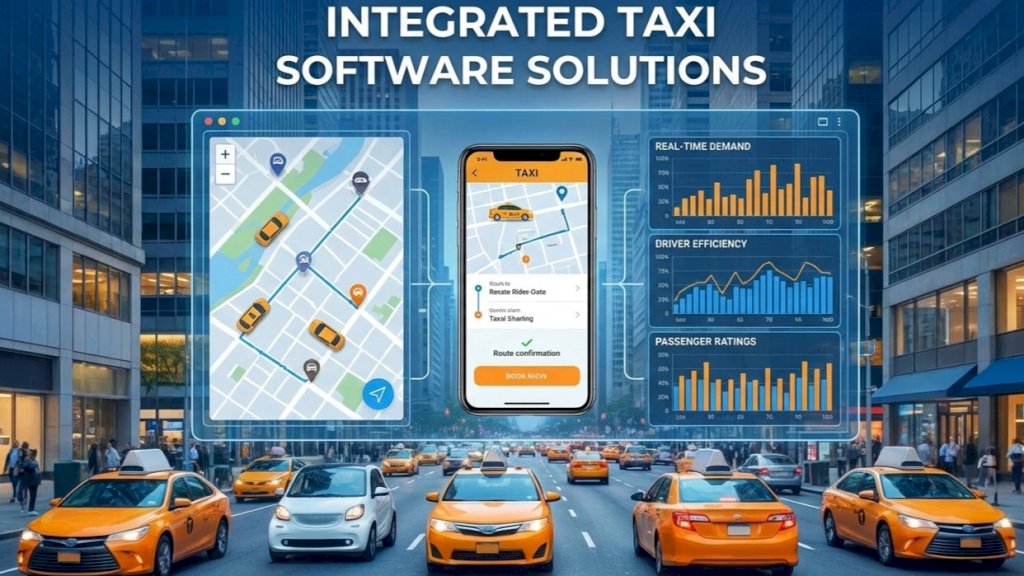
Today, the taxi software you choose isn't just a support tool; it's the engine, the steering wheel, and the GPS of your profitability. With global giants adjusting their algorithms every hour, local and medium-sized businesses need a new infrastructure, one that not only matches those capabilities but surpasses them in flexibility and customer focus.
Choosing the right app for your business is one of the most critical decisions you'll make. A mistake here not only costs money on licenses, but can also mean losing frustrated drivers and passengers who don't return. Below, we break down the ultimate roadmap to ensure your choice is a strategic investment, not an operating expense.
Beyond "point A to point B"
In today's market, specialization is profitable, but rigidity is fatal. When evaluating software for transportation companies, the first question you should ask yourself is: How adaptable is it to my actual business model? You need software that allows you to manage:
-
Immediate and individual trips.
-
Scheduled bookings: vital for the tourism sector and airport transfers.
-
Corporate transport (B2B): With specific panels for companies to manage their employees' travel.
-
Courier and last mile services: To take advantage of your fleet's idle capacity during off-peak hours.
Many platforms are designed only for dispatching traditional taxis. However, by 2026, the most successful companies will be hybrid. If the software you're considering forces you to change your operational processes to "fit" its system, discard it. Technology should adapt to your operation, not the other way around.
User experience
By 2026, the average user's patience is practically nonexistent. If your app takes more than a few seconds to load or requires too many clicks to request a ride, passengers will look for something simpler. That's why you should prioritize certain features that will keep customers loyal to your taxi dispatch system.
What are passengers looking for?
The interface should be clean, modern, and above all, transparent. The software must provide accurate price estimates because customers want to know exactly how much they will pay when booking a trip. They also expect real-time tracking with minimal latency and multiple payment methods, including digital wallets and stablecoins.
A key differentiator is the white-label customization capability. The customer should feel they are interacting with your company, not generic software. This can include photos of customers and drivers, as well as frequently visited locations for easy access in their daily routine.
What are you looking for in a driver?
We often forget that the driver is the most important internal customer. Their app must be efficient in its battery and data usage. Prioritize intuitive navigation with seamless integration with Google Maps, Waze, and local maps. Drivers also value transparency in earnings, so opt for a clear dashboard where they can see their income and commissions.
Dispatch intelligence and AI algorithms
In the past, dispatch was based simply on who was closest; by 2026, that will no longer be enough. The leading fleet management platform must leverage technological advancements to predictively optimize operations. Depending on your niche and your business needs, you can look for providers that offer the following features.
-
Smart assignment: The nearest driver isn't always the best option. The algorithm must consider traffic flow, the driver's compliance history, and the type of vehicle requested.
-
Heat maps and demand prediction: The system should advise your drivers where to go, based on historical data and real-time events.
-
Dynamic pricing: The ability to automatically adjust prices based on supply and demand ensures your fleet is always profitable. This can keep your drivers motivated during peak hours.
As we mentioned, the right features or tools for your app depend on your business. This refers to whether you'll be transporting passengers in specific areas, such as airports, tourist destinations, school zones, corporate areas, and other similar scenarios.
The command tower
As an owner or manager, you need to see the forest for the trees. The ideal fleet management system should offer a robust dashboard that centralizes all critical information. This will allow you to answer questions like: How many trips are currently being taken? What is the cancellation rate? Which drivers are inactive?
The panel also functions as an emergency center, receiving instant alerts if a driver activates the panic button or if the GPS detects an unusual route deviation. Ensure that your customer and driver data belongs solely to your company. If the software provider "hijacks" your information, you lose control of something as valuable as your data.
Technology as a competitive advantage
In an environment as volatile as that of 2026, the digital infrastructure you choose will determine the future of your company. It will determine whether you become a dominant player in your region or simply a spectator of others' success. Choosing the best taxi software isn't about finding the lowest price, but about finding the best technology partner.