
 Use cases
 Messaging
 Taxi Companies
 Private Transport
 Transportation Entrepreneurs
 Last Mile
 SuperApp
 Software
 Taxi dispatch
 Corporate transportation
 Auction
 Products
 Booking Software
 Dispatch Platform
 Driver App
 Passenger App
 Web Widget
 Functions
 Schedule & Booking
 Driver Management
 Custom
 Corporate Portal
 Security & Support
 Resources
 Learn
Learn



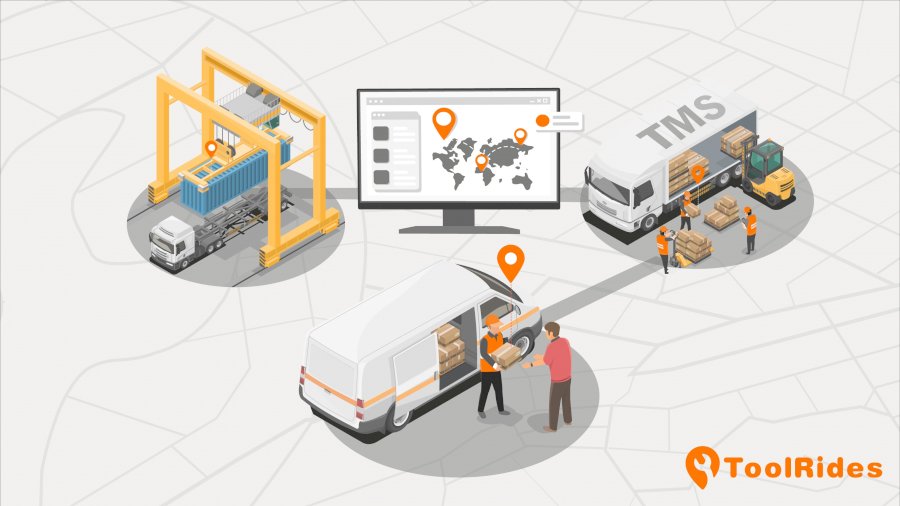
A Transportation Management System is a crucial tool for companies that rely on logistics to deliver products and services. Below, you’ll find a complete guide to understanding what a TMS is, how it works, and how it can benefit your business.
Contents
What Is a TMS?
A Transportation Management System (TMS) is a logistics platform that uses technology to help companies plan, execute, and optimize the physical movement of goods. It can support both inbound and outbound operations and cover internal as well as external transportation processes.
Benefits of Using a TMS
- Cost Optimization: Helps reduce transportation costs by selecting more efficient routes and consolidating shipments.
- Improved Visibility: Provides real-time tracking of drivers and goods, supporting better decision-making.
- Process Automation: Reduces the time and effort required for repetitive tasks such as trip pricing, driver assignment, and route dispatching.
- Improved Customer Service: Helps ensure timely and accurate deliveries while giving customers real-time visibility into their orders, improving overall satisfaction.
Key Components of a TMS
- Transportation Planning: Helps select the best routes and transportation methods.
- Transportation Execution: Manages transportation orders, including the generation of required documents and proof of delivery.
- Tracking and Visibility: Provides real-time monitoring of shipments.
- Exception Management: Handles unexpected situations such as shipment rescheduling, delays, or damage.
- Analytics and Reporting: Provides dashboards with key KPIs to measure metrics such as average shipments completed, peak shipping times, heat maps, and other analytics used to improve operational efficiency.
Types of TMS
1. On-Premise TMS
An On-Premise TMS is a solution installed and operated on a company’s own local servers. This means the company is responsible for system maintenance, updates, and security.
Advantages:
- Full Control: The company has complete control over the system, allowing for specific customizations based on its operational needs.
- No Internet Dependency: The system does not rely on internet availability to operate, which can be critical for certain types of operations.
Disadvantages:
- High Upfront Cost: Installation and hardware costs can be significant.
- Maintenance: Requires internal staff or external services to maintain and update both the software and servers.
- Limited Scalability: Scaling can be more difficult and expensive compared with cloud-based solutions.
2. Cloud-Based TMS
A Cloud-Based TMS is a solution hosted on remote servers and accessed over the internet. Cloud TMS providers are responsible for maintaining, updating, and securing the system.
Advantages:
- Accessibility: It can be accessed from anywhere with an internet connection, making remote management easier.
- Scalability: It can easily scale according to the company’s changing needs.
- Lower Upfront Cost: It generally requires less initial investment because there is no need to maintain your own infrastructure.
- Support and Maintenance: The software and servers receive regular updates and maintenance from the provider.
Disadvantages:
- Internet Dependency: Requires an internet connection to operate.
- Provider Dependency: The company depends on the provider for maintenance and system updates.
How to Choose the Right TMS
- Assess Your Company’s Needs: Analyze the size of your operation, shipment volume, and specific requirements.
- Consider Scalability: Make sure the TMS can grow alongside your business.
- Evaluate Ease of Use: Choose systems with intuitive interfaces and a user-friendly experience to encourage faster adoption among employees.
- Analyze Integration Capabilities: Confirm that the TMS can integrate with other systems already used by your company or supports integration through APIs.
- Evaluate Cost vs. Benefit: Consider not only the initial investment, but also maintenance and upgrade costs, as well as the potential improvements in operational efficiency.
- 24/7 Support: Reliable provider support is especially important when critical issues arise. Training is also essential to ensure proper system use and reduce the learning curve.
- Test the Software: Before making a final decision, test the system to make sure it meets your expectations.
A TMS is an essential tool for any company that manages the transportation of goods. From reducing costs to improving visibility and customer service, the benefits are significant. Choosing and implementing the right TMS can transform the efficiency and effectiveness of logistics operations.