
 Use cases
 Messaging
 Taxi Companies
 Private Transport
 Transportation Entrepreneurs
 Last Mile
 SuperApp
 Software
 Taxi dispatch
 Corporate transportation
 Auction
 Products
 Booking Software
 Dispatch Platform
 Driver App
 Passenger App
 Web Widget
 Functions
 Schedule & Booking
 Driver Management
 Custom
 Corporate Portal
 Security & Support
 Resources
 Learn



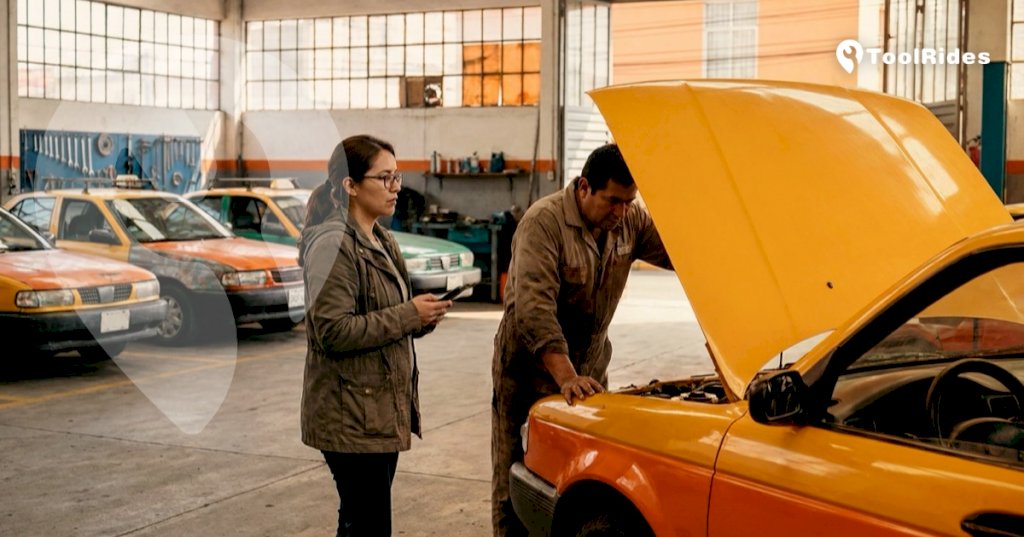
Searching for fleet management software for taxi companies brings up two very different kinds of product under the same name. Both show cars on a map, which is why they get confused. This guide explains what each one does, which problems belong to which, how to calculate what is at stake in your own fleet and when it makes sense to run both. It is written for owners and operations managers of taxi, private hire and corporate transport fleets.
What fleet management software does
Fleet management, often called telematics, looks after the asset. It answers questions about the vehicle, not about the passenger.
- Where each vehicle is and how it is being driven.
- When service, tires or inspections are due.
- Fuel use, idle time and engine alerts.
- Repair history and cost per vehicle.
Many of these features need a device installed in each vehicle, with its own hardware and connectivity cost.
What dispatch software does for a taxi company
Dispatch software looks after the service. It is the system your dispatchers, drivers and passengers use on every trip.
- Takes bookings by app, web, phone or WhatsApp.
- Assigns the nearest available driver, manually or automatically.
- Applies fares by distance, time, zone or corporate client.
- Shares a live tracking link with the passenger.
- Calculates driver commissions and bills companies by period.
Because it runs on the driver's phone, it needs no extra hardware. Our article on dispatch system features covers each function in detail.
Fleet management software for taxi vs dispatch: side by side
| Question | Fleet management | Dispatch software |
|---|---|---|
| Who uses it daily | Maintenance and fleet manager | Dispatchers, drivers and passengers |
| Main data source | Device in the vehicle | Driver and passenger apps |
| Takes bookings | No | Yes |
| Sets fares and bills customers | No | Yes |
| Maintenance planning | Yes | Basic, through trip and mileage records |
| Brings in revenue | Indirectly, by cutting costs | Directly, by filling more trips |
Example: what is at stake in a 50-car taxi fleet
AAA's 2025 Your Driving Costs study puts average maintenance, repairs and tires at 11.04 cents per mile, based on 15,000 miles a year. A taxi drives far more. Assume 50,000 miles per car per year.
| Item | Calculation | Per year |
|---|---|---|
| Maintenance for 50 cars | 50 × 50,000 × USD 0.11 | USD 275,000 |
| 5% saving from better maintenance | 275,000 × 5% | USD 13,750 |
| Revenue from one extra trip per car per day | 50 × 1 × 300 days × USD 6 | USD 90,000 |
The figures are illustrative, but the pattern is common: for most taxi fleets the biggest lever is filling more trips and losing fewer calls. Cutting maintenance cost matters, yet it usually comes second. That is why dispatch tends to be the first system a taxi company needs. More ways to recover lost hours are in reducing fleet idle time.
Signs your taxi company needs dispatch first
Most owners already know where the money leaks. If several of these sound familiar, your next system should be dispatch, not telematics.
- Calls go unanswered at peak hours and customers book with someone else.
- Dispatchers spend the day phoning drivers to find who is free.
- Drivers negotiate prices instead of charging a set fare.
- Corporate clients ask for monthly reports you build by hand in a spreadsheet.
- Driver commissions are calculated at the end of the week from paper notes.
On the other hand, if your cars are company-owned, travel long distances and break down often, fleet management may be the more urgent purchase. The deciding question is simple: does the bigger loss come from trips you never complete, or from vehicles that cost too much to keep on the road?
Whichever you choose, measure it. Track trips per car per day, average pickup time and cancellations before and after the change, using the KPIs every taxi company should track.
When to use both, and how to keep them in order
Large fleets with company-owned vehicles often run both systems. It works well if each one has a clear job.
- Dispatch is the source of truth for trips, drivers and customers.
- Fleet management is the source of truth for vehicle condition and repairs.
- Use the same vehicle ID in both, so reports match.
- Start with the system that solves your most expensive problem today.
Driver safety also spans both. The World Health Organization counted 1.19 million road deaths in 2021, so ratings, trip records and an SOS button in the driver app are part of any serious operation. See our guide on managing drivers at scale.
Where ToolRides fits
ToolRides is white-label dispatch software for taxi, private hire and corporate transport fleets. It includes an admin panel, a driver app and a passenger app under your brand, manual and automatic dispatch, fares by distance, time or zone, corporate accounts with cost centers, driver settlements, live tracking, ratings and an SOS button. It runs on the driver's phone, so there is no hardware to install. Learn more about driver management and the dispatch platform.
Frequently asked questions
Can fleet management software dispatch taxis?
Generally not. Knowing where a car is differs from taking a booking, applying a fare and sending the trip to a driver. If that is your main need, you need dispatch software.
Do I need a device in every taxi?
Not for dispatch. The driver app provides GPS location for every trip. Devices are needed only for engine data or detailed driving behavior.
Which should a taxi company buy first?
Usually dispatch, because it affects revenue every day. Add fleet management later if maintenance costs or vehicle data become a real problem.
Does dispatch software help with maintenance at all?
Partly. Trip and mileage records per vehicle show which cars work hardest, which helps you plan service. Detailed engine diagnostics still need a telematics device.